


Systems science gone bio

Diagnostic intelligence with its work shown.

Nureon reasons systematically over disease categories to surface the secondary hypertension cases that standard screening misses — every result carries provenance, an explained causal ranking, and a verifiable reasoning trail.

371K
Annual U.S. deaths attributed to diagnostic error
29.6%
Hypertensives under 40 with a secondary cause
<2%
Of eligible patients screened for aldosteronism
14yr
Diagnostic delay the model would have flagged
The gap

Secondary hypertension is common, treatable, and routinely missed.

Roughly a third of young hypertensive patients have a secondary, often curable cause. Diagnostic delays of four to fourteen years are routine — driven not by missing data, but by predictable failures of reasoning.

01

Premature closure

Essential hypertension is recorded without investigating secondary causes, despite the patient's age signalling high prevalence.

02

Failure to update

A single negative screen — an aldosterone-to-renin ratio with sensitivity as low as 0.22 — is treated as definitive and the workup is closed.

03

Cross-system blindness

Failure paths that cross specialty lines (renal → endocrine → cardiac) go unfollowed; no single clinician owns the complete picture.

Documented case Missed · 14 yr

Primary aldosteronism, missed for 14 years

  • AGE 27Diagnosed as essential hypertension. ARR negative — case closed.
  • + YEARSProgressive medication resistance. No re-evaluation.
  • + YEARSHypokalemia and end-organ damage develop. Not re-screened.
  • AGE 41Unilateral aldosterone-producing adenoma confirmed.

Run through Nureon, aldosteronism leads the differential after a single finding — flagging that the negative screen was never sufficient to exclude it.

The core insight

Diagnosis is an inverse problem. At Nureon, we do not invert physiology.

Half a century of forward physiological simulators failed clinically because running them backwards is mathematically ill-posed. Nureon sidesteps that obstacle by reasoning over a mechanistic causal model — a bounded failure net of root causes — rather than inverting continuous physiology.

Forward simulation

Invert a 5,000-variable model

Models like HumMod track thousands of continuous parameters. Inverting them from 20–50 clinical measurements is catastrophically underdetermined — too slow, too fragile, and too opaque for the clinic.

Nureon

Reason over 8–15 root causes

Reasoning runs over a bounded set of root causes, not thousands of parameters. Mechanistic knowledge structures the causal model; it is never executed as a simulation. Diagnosis proceeds by abductive matching to causal paths — real-time and auditable.

The architecture

Five layers, one auditable reasoning chain.

Each layer plays a defined role in turning observed evidence into an explained, defensible differential diagnosis.

L1

Physiological knowledge base

FMEA-structured failure nets map how organ-level failures propagate into observable effects — used as a knowledge scaffold, never as a live simulation.

FMEA structure
L2

Diagnostic signatures

Each root cause compiles into a characteristic multi-finding pattern, derived from how failure propagates through the net and mapped against ICD-11 base code combinations.

Signature tables
L3

Mechanistic causal-inference engine

Abductive reasoning identifies which root cause best explains the observed findings, scoring how completely and coherently each candidate accounts for them — fast and directly interpretable.

Causal scoring
L4

Feedback-loop & dynamic-state

Reinforcing and balancing feedback loops, with their decompensation thresholds, let the tool reason about causes that stay silent while compensated — and flag what would unmask them.

Compensation modelling
L5

Detection-control assessment

Known test sensitivity and specificity are modelled explicitly, so a negative screen is treated as weak evidence — a causally well-supported cause stays in the differential rather than being falsely excluded.

Test imperfection
Team

Deep engineering and personalised-medicine founders.

Nureon sits at the intersection of reliability engineering, systems and causal modelling, and clinical medicine — and the founding team spans exactly that seam.

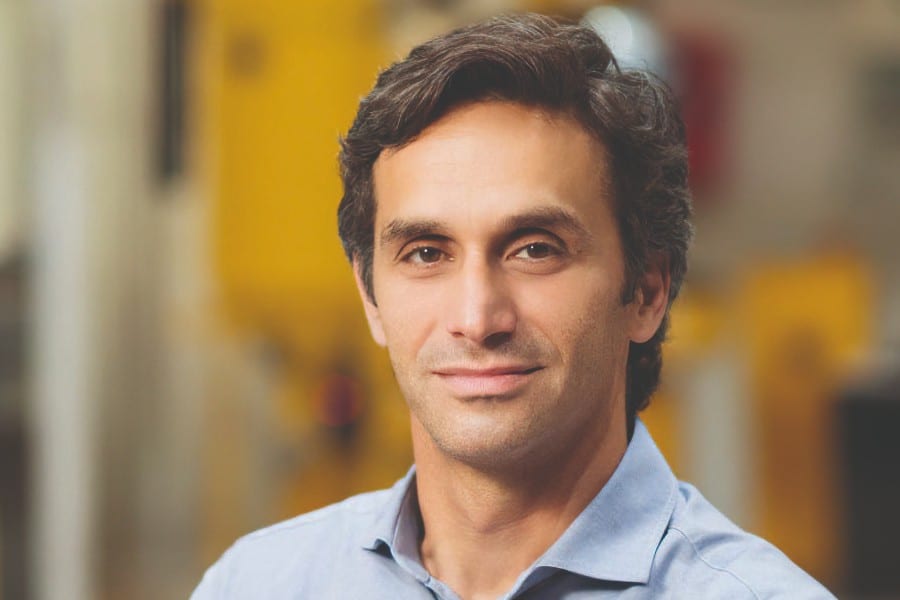
Co-founder
Alexandros Papalexiou
Co-founder & technical lead
Alexandros Papalexiou
  • Built and validated the Nureon proof-of-concept against real epidemiological data and a published 14-year diagnostic miss.
  • Deep expertise in engineering reliability methodology — FMEA method, fault tree analysis, ISO 26262
  • Previously at Bugatti-Rimac, Arrival, Lotus, Hellenic Air Force.
Co-founder
Panagiotis Papalexiou
Co-founder & scientific lead
Panagiotis Papalexiou
  • Medical doctor, anesthesiology consultant.
  • MSc personalised medicine, University Hospital of Patras, Greece.
  • ERC course director.
  • Previously at University Hospital of Patras, General Hospital of Voula "Asklipieio".
Clinical advisory panel Engaged
  • 01Violeta Papalexiou — neurology resident, PhD(c), MSc neuroscience.
  • 02Endocrinology, nephrology, cardiology, neurology — 3–5 specialist advisors.
  • 03Regulatory advisor — CDS classification & SaMD pathway.
Key hires — seed funded Hiring
  • 012× software engineers — clinical informatics, FHIR/EHR integration, FTEs.
  • 02Systems / causal modeller — full-time through validation phase.
  • 03Clinical lead — fractional through Phase 3, full-time at pilot launch.
Seed round

Raising a seed round to reach the validation gate.

Nureon is partnering with investors and clinical collaborators who understand that the moat is a compounding data flywheel — every case enriches the calibration infrastructure competitors cannot easily replicate.

Knowledge
Knowledge base & clinical advisory
Engine
Reasoning engine & interface
Validation
Retrospective validation study
Regulatory
Regulatory & liability counsel
Request the full deck